
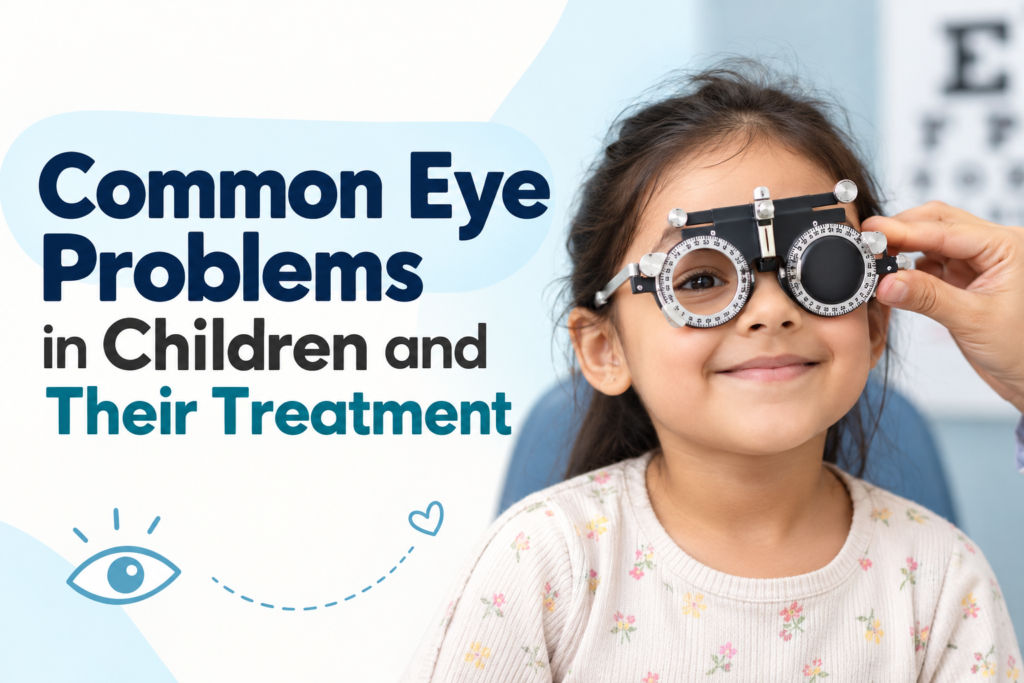
Children can experience eye problems such as refractive errors, squint, lazy eye, eye infections, allergies and excessive watering. Early eye examinations can help detect these conditions and support healthy vision development. Parents should consult an eye specialist if they notice changes in their child’s vision, eye alignment or visual behaviour.
Why Is Children's Eye Health Important?
Good vision is essential for a child’s learning, development and everyday activities. Children may not always realise or communicate that they have difficulty seeing clearly. As a result, some vision problems can remain unnoticed.
Early identification of children’s eye problems can help in timely treatment and reduce the risk of long-term vision difficulties. Regular eye check-ups for children are particularly important when there is a family history of eye problems or noticeable changes in vision.
Common Eye Problems in Children
Children can develop several types of eye conditions. Some are temporary, while others may require regular monitoring or treatment.
1. Refractive Errors in Children
Refractive errors include myopia, hyperopia and astigmatism. These conditions can cause blurred vision and may make it difficult for a child to see the blackboard, read books or recognise objects from a distance.
Common signs include squinting, sitting close to the television and holding books very close to the face.
An eye examination can determine whether prescription glasses are required.
2. Squint or Crossed Eyes
Squint, medically known as strabismus, occurs when the eyes do not align properly. One eye may turn inward, outward, upward or downward.
Some children with squint may have difficulty using both eyes together. Early assessment is important because untreated problems with eye alignment can affect normal visual development.
Depending on the cause, squint treatment in children may involve glasses, observation or other treatment recommended by an eye specialist.
3. Lazy Eye
Lazy eye, or amblyopia, occurs when one eye develops weaker vision than the other during childhood.
A child with lazy eye may not complain about poor vision because the stronger eye compensates for the weaker one.
Treatment depends on the cause and severity and may include prescription glasses, patching or other approaches recommended after an eye examination.
4. Eye Infections in Children
Children may develop eye infections that cause redness, watering, discharge, irritation or swelling.
Eye infections can have different causes, so parents should avoid using leftover medicines or eye drops without professional advice.
A qualified Eye Specialist in Dhule can assess the symptoms and determine the appropriate treatment.
5. Eye Allergies
Eye allergies can cause itching, redness, watering and irritation. Children may frequently rub their eyes when experiencing these symptoms.
Identifying possible triggers and following appropriate treatment can help manage allergic eye problems.
If symptoms continue or become frequent, professional child eye care in Dhule can help determine the underlying cause.
6. Excessive Watering
Persistent watering may occur because of irritation, allergies, infection or problems involving the tear drainage system.
Occasional watering may not indicate a serious problem, but persistent or excessive watering should be evaluated, particularly when accompanied by redness, swelling or discomfort.
Signs Your Child May Need an Eye Check-Up
Parents should pay attention to changes in their child’s visual behaviour.
Common warning signs include:
- Frequently squinting or closing one eye
- Holding books or screens unusually close
- Sitting very close to the television
- Difficulty seeing the blackboard
- Frequent headaches while reading
- Complaining of blurred or double vision
- Frequent eye rubbing
- Persistent redness or watering
- An eye turning inward or outward
- Avoiding reading or visually demanding activities
- Difficulty recognising objects from a distance
If these signs occur regularly, an Eye Doctor in Dhule can perform an appropriate examination.
How Are Children's Eye Problems Treated?
Treatment depends on the child’s age, symptoms, diagnosis and severity of the condition.
Depending on the underlying problem, treatment may include:
- Prescription glasses
- Eye patching for selected cases of lazy eye
- Treatment for infections or allergies
- Management of squint
- Treatment for tear drainage problems
- Regular vision monitoring
- Specialist treatment when required
The right treatment should always be based on an eye examination rather than symptoms alone.
What Is Pediatric Ophthalmology?
Pediatric ophthalmology focuses on eye health and vision problems affecting infants, children and adolescents.
Children’s eyes are still developing, which is why identifying and managing vision problems at an appropriate stage can be important.
Parents looking for a Children’s Eye Specialist in Dhule should consider professional assessment when a child shows persistent changes in vision or eye behaviour.
When Should Parents Consult an Eye Specialist?
Parents should consider an eye examination if their child experiences:
- Persistent blurred vision
- Frequent squinting
- Unusual eye alignment
- Eye pain or discomfort
- Persistent redness
- Excessive watering
- Difficulty reading or seeing the blackboard
- Frequent headaches associated with visual activities
- Sudden changes in vision
Early consultation can help identify the cause and determine whether treatment or regular monitoring is needed.
Choosing the Best Eye Hospital in Dhule for Children's Eye Care
When parents search for the Best Eye Hospital in Dhule, they should consider factors such as experienced ophthalmologists, appropriate diagnostic facilities, comprehensive eye-care services and a child-friendly approach.
A good eye-care centre should focus on accurate diagnosis and treatment according to the child’s individual needs. Parents should also consider whether the facility provides appropriate follow-up for conditions that require monitoring.
For families seeking Pediatric Eye Care in Dhule, choosing professional and reliable eye care can help support healthy visual development.
Why Is Early Eye Care Important for Children?
Many children do not recognise that their vision is different from normal. They may adapt to blurred vision or rely more heavily on one eye without telling their parents.
Conditions such as refractive errors, squint and lazy eye may benefit from early detection and appropriate management.
Regular examinations can therefore play an important role in maintaining children’s eye health.
Frequently Asked Questions
What are the most common eye problems in children?
Common conditions include refractive errors, squint, lazy eye, eye infections, allergies and excessive watering. Some children may also experience difficulty seeing clearly without obvious symptoms.
How can I know if my child needs glasses?
Squinting, sitting close to screens, holding books close to the face or difficulty seeing the blackboard can indicate a possible vision problem. An eye examination is needed to determine whether glasses are required.
Can lazy eye be treated in children?
Lazy eye can often be managed more effectively when detected early. Treatment depends on the cause and may include glasses, patching or other methods recommended by an ophthalmologist.
Can squint affect a child's vision?
Some forms of squint can interfere with normal visual development. Early evaluation can help determine the cause and appropriate management.
Why does my child keep rubbing their eyes?
Frequent eye rubbing may be related to allergies, irritation, dryness or other eye conditions. Persistent eye rubbing should be evaluated by an eye specialist.
Can too much screen time affect children's eyes?
Extended screen use may contribute to temporary eye strain, dryness and discomfort. Regular breaks, appropriate viewing distance and good screen habits can help reduce eye strain.
How often should children have an eye examination?
The recommended frequency depends on the child’s age, symptoms, risk factors and previous examination results. Children with existing eye conditions may require follow-up examinations as advised by their ophthalmologist.
When should parents take a child to an eye specialist?
Parents should seek professional advice if a child has persistent blurred vision, unusual eye alignment, eye pain, redness, excessive watering, frequent headaches or difficulty with visually demanding activities.
Where can parents get children's eye care in Dhule?
Parents can consult an experienced ophthalmologist for a detailed assessment of their child’s vision and eye health. Dr. Vrushali Patil can guide parents regarding appropriate evaluation, treatment and follow-up based on the child’s individual eye condition.
Conclusion
Children’s eye problems can range from common refractive errors to conditions that require specialist attention. Because children may not always recognise or communicate vision difficulties, parents should pay attention to changes in visual behaviour.
Timely eye examinations, appropriate treatment and regular follow-up can help support healthy vision development.
For families looking for the Best Eye Hospital in Dhule, choosing a centre with professional eye-care services and appropriate children’s eye evaluation can be an important step towards protecting a child’s vision.