
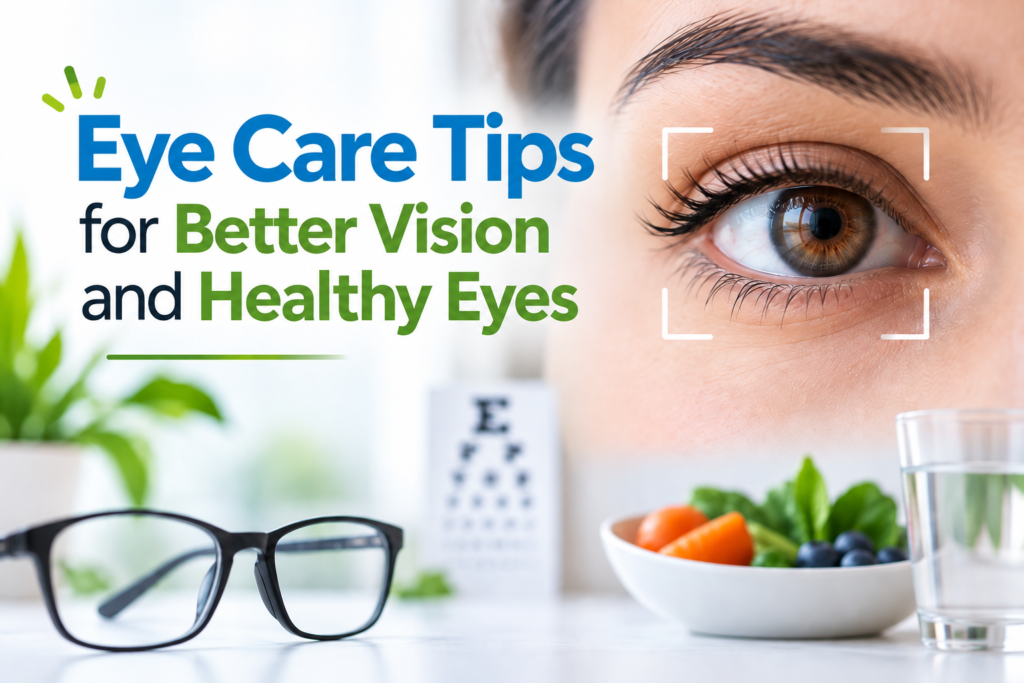
Your eyes play an important role in everyday life, from reading and working to driving and recognizing people around you. Taking simple steps to protect your eyes can support healthy vision and help reduce the risk of some eye problems.
So, what are the best eye care tips for better vision and healthy eyes? Maintaining a balanced lifestyle, protecting your eyes from UV rays and injuries, taking regular screen breaks, maintaining good contact lens hygiene, and getting routine eye examinations are important habits for eye health.
At Shri Ramchandra Netralaya, Dr. Saket Patil provides professional eye care and guidance for patients with different vision and eye health concerns. Regular eye evaluation can help identify vision problems and certain eye conditions at an early stage.
10 Eye Care Tips for Better Vision and Healthy Eyes
1. Get Regular Eye Examinations
Regular eye examinations are an important part of maintaining healthy vision. Some eye conditions may develop without noticeable symptoms in the early stages. A comprehensive eye examination can help identify potential problems and determine whether treatment or monitoring is needed.
2. Take Regular Breaks From Screens
If you spend several hours using computers, smartphones or other digital devices, give your eyes regular breaks. The 20-20-20 rule is a simple habit: every 20 minutes, look at something around 20 feet away for about 20 seconds.
3. Protect Your Eyes From UV Rays
Wear sunglasses that provide appropriate UVA and UVB protection when spending time outdoors. A hat or cap can also provide additional protection from direct sunlight.
4. Eat a Balanced Diet
A balanced diet containing leafy green vegetables, fruits and other nutrient-rich foods can support overall and eye health. Include a variety of healthy foods rather than relying on a single food for better vision.
5. Maintain Good Contact Lens Hygiene
If you wear contact lenses, wash your hands before handling them and follow the cleaning, wearing and replacement instructions provided by your eye care professional.
6. Use Protective Eyewear
Wear suitable protective eyewear during activities such as home repairs, industrial work, gardening or sports where your eyes could be exposed to dust, chemicals or injury.
7. Manage Diabetes and Blood Pressure
Health conditions such as diabetes and high blood pressure can affect eye health. Following your doctor’s advice and maintaining regular health and eye check-ups can help monitor possible complications.
8. Avoid Smoking
Smoking is associated with an increased risk of certain eye diseases. Avoiding tobacco can benefit your overall health as well as your eye health.
9. Do Not Ignore Vision Changes
Do not ignore symptoms such as blurred vision, sudden changes in eyesight, eye pain, persistent redness, double vision, flashes of light or new floaters. These symptoms may require prompt evaluation by an eye care professional.
10. Know Your Family Eye Health History
Tell your eye doctor if close family members have had eye conditions such as glaucoma or other eye diseases. Family history can be an important part of understanding individual eye health risks.
When Should You Visit an Eye Doctor?
You should consult an eye care professional if you experience:
- Blurred or decreased vision
- Eye pain
- Persistent redness
- Double vision
- Flashes of light
- New or increasing floaters
- Difficulty focusing
- Persistent eye strain
Dr. Saket Patil can evaluate your symptoms and recommend appropriate eye examinations or treatment based on your individual condition.
Frequently Asked Questions About Eye Care
What are the best eye care tips for healthy eyes?
Regular eye examinations, screen breaks, UV protection, a balanced diet, proper contact lens hygiene and protective eyewear are some important eye care habits.
How can I protect my eyes from screen time?
Take regular breaks while using digital devices and follow the 20-20-20 rule. Adjusting screen brightness, maintaining a comfortable viewing distance and blinking regularly may also make screen use more comfortable.
How often should I get an eye check-up?
The recommended frequency depends on your age, medical history, family history and individual risk factors. Your eye doctor can suggest an appropriate examination schedule.
When should I see an eye doctor?
If you notice sudden or persistent changes in vision, eye pain, flashes, new floaters, double vision or other concerning symptoms, seek professional eye care.
Take Care of Your Eyes Today
Healthy vision starts with simple and consistent eye care habits. Protect your eyes from UV exposure and injuries, take regular breaks from screens, maintain a healthy lifestyle and get appropriate eye examinations.
If you are looking for professional eye care in Dhule, Shri Ramchandra Netralaya offers eye evaluation and treatment services. Dr. Saket Patil can provide appropriate guidance based on your eye health and vision concerns.